Lord of the Flies
Production sound mixer and head of department, Langkawi. Emmy nomination, Outstanding Sound Mixing.
- Almost four months across several islands, in jungle and ocean.
- A department of three: me, boom operator Adyt Santoso and sound assistant Reza Feryanto.
- More than thirty young actors on radio mics.
- Humidity at 85 per cent, and surf too loud to boom.
- Nominated for the 2026 Emmy for Outstanding Sound Mixing.
The brief
Normally you record the dialogue and keep everything else out. Marc Munden wanted the opposite: capture the scene as it is performed and, in that same take, whatever the island gives you. A thunderclap rolling in behind a line. A bird call landing at the right moment. He wants the trees, he wants the ocean.
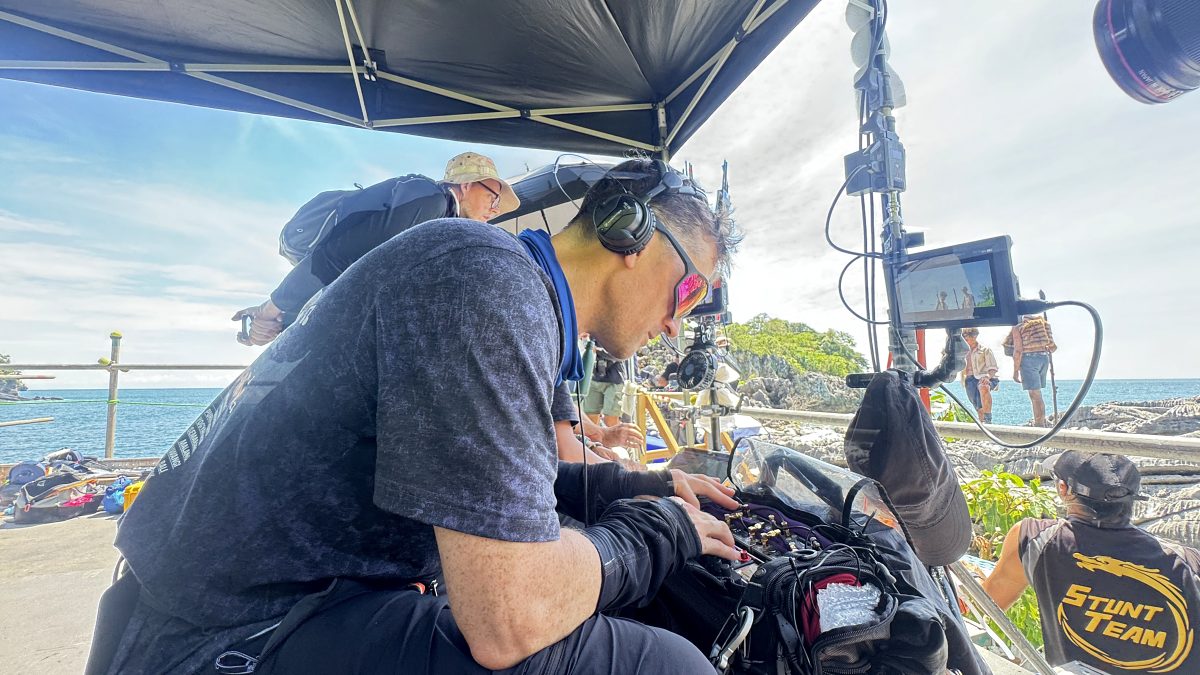
Microphones with nowhere to hide
The boys are stranded on a tropical island, so the shirts come off. The surf is too loud to boom everything, and a boom magnifies whatever is around it. The job becomes finding a place for the microphone where there is not one. With the costume department we built pockets into the boys' leather belts, and kept spares prepared for every way a scene could go. A position that worked when an actor stood was useless the next take when he sat.
Into the water
One scene carried on into the water. The microphone was on a belt, doing its job, and mid-take the signal stopped: the transmitter had flooded. You do not call cut to save your gear. A transmitter can be replaced. That performance, in that water, with those kids, cannot.
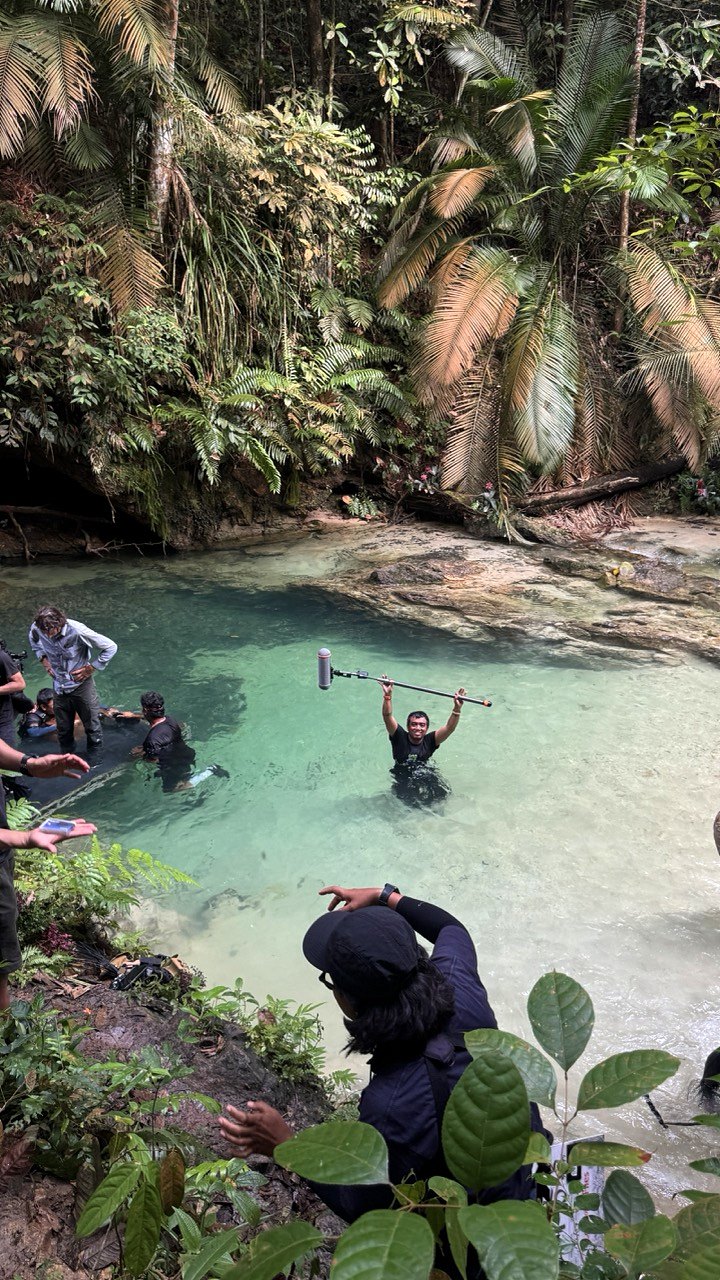
The waterfall
A major scene played out metres from a waterfall. There is no plug-in for that. It took a series of decisions, made in order. Read how it was recorded →
The island on set
I went out before dawn to record the bird chorus, and when I found something special I sent it to Marc. For the scene where Simon approaches the boar's head on its stick, he played one of those bird calls live, just before the take. The bird the boys heard is the bird the audience hears.
Two nights on the islands
I left ambisonic microphones out overnight, close to the water. One night the call to prayer from the mainland carried clean across the strait and into the recording.
Piggy and the conch
Piggy finally manages to blow the conch, and at the very end you hear his breath inside the shell and the faint ocean in it. It looks like a happy accident. It is also what a careful rig is set up to catch.
Recorded live
The chants, the arguments and the panic were captured on location, with those kids, in that place. When that happens the recording carries something real, and the audience does not have to work to believe it.
Four months
There was no single hard moment. The test was the length of it: islands, jungle, ocean, weather and a young cast, for almost four months. The first assistant director treated the shoot like an ultra-marathon, and so did we: morning warm-ups, careful protection of the gear, sun care, and a team that arrives together.
“Ande was brilliantly diligent on our adaptation of Lord of the Flies. He was meticulous with radio miking and provided a multitude of rainforest wild tracks recorded on location.”
The interviews: watch, listen and read →
Monkey ManHunt for the WilderpeopleLast to Leave the IslandAll credits