Where the dialogue was recorded
The headline says difficult locations. These are the ones, and the job behind each.
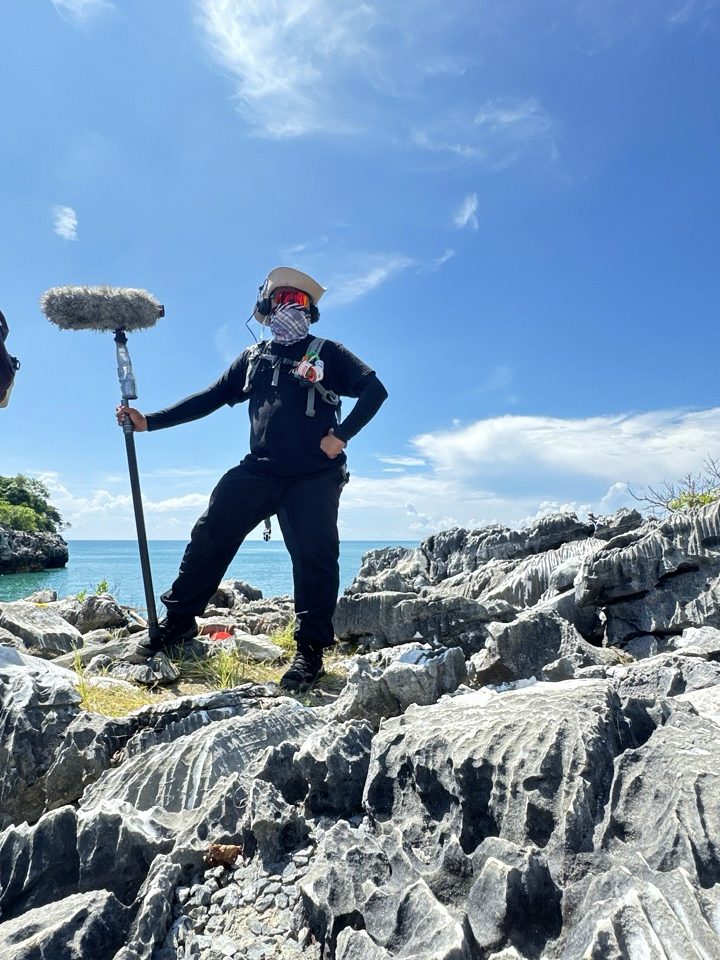
Open sea
Lord of the Flies, BBC and Netflix. Almost four months across the islands off Langkawi. Days began before dawn with a half-hour boat ride, then an hour on foot through jungle, the kit on our backs in waterproof bags.
At the shoreline the surf is too loud to boom everything, and a boom magnifies whatever is around it. So the dialogue came from DPA microphones hidden where there was nowhere to hide them: pockets built into the boys' leather belts, worked out with the costume department.
Tides came in and weather rolled through, so the three of us split three ways: one on set, one with costume and makeup, one guarding the rig.
Underwater
On a documentary I recorded the divers' scuba radio from the boat, with an antenna lowered into the water. For the sound of the water itself I use a hydrophone.
Swimming
On Lord of the Flies the boys lay on the beach, crouched and walked through the waves, so the usual microphone positions changed from scene to scene.
One scene carried on into the water. The microphone was on a belt, doing its job, and mid-take the signal stopped: the transmitter had flooded. You do not call cut to save your gear. A transmitter can be replaced. That performance, in that water, with those kids, cannot.
Jungle and waterfalls
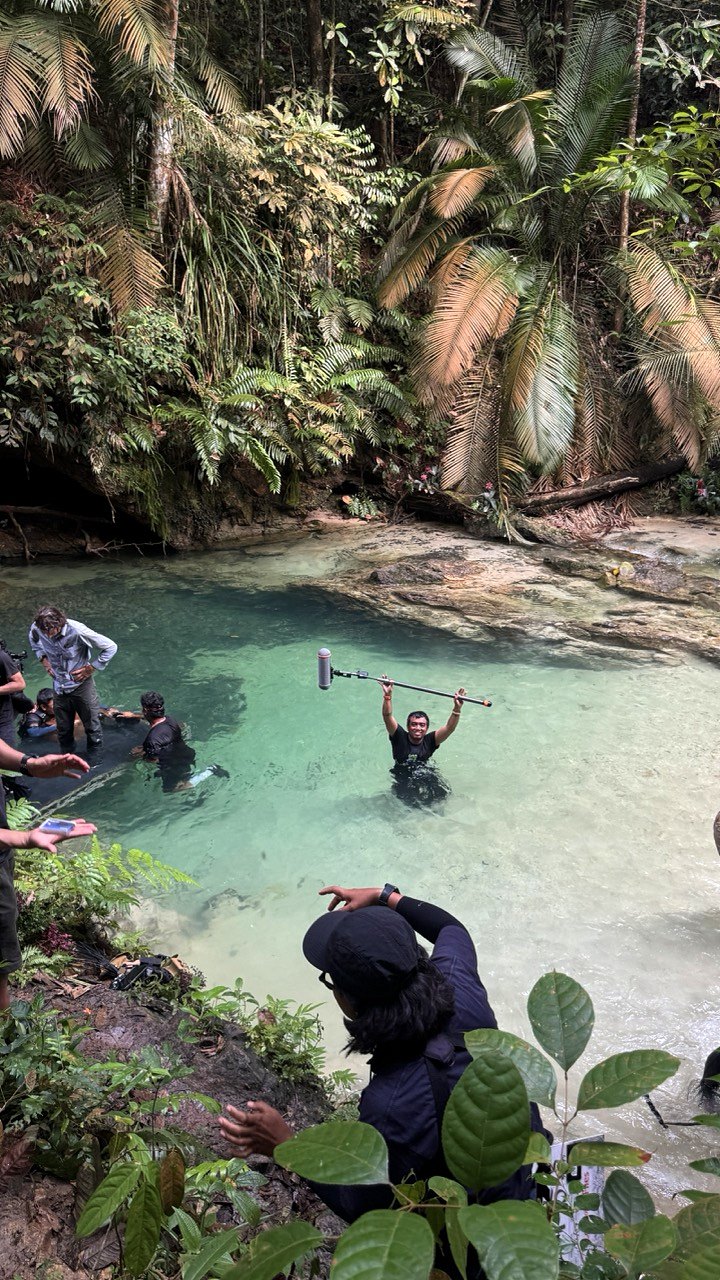
Humidity at 85 per cent, and rain as the great leveller. On Lord of the Flies we moved every fifteen to thirty minutes to a new patch of bush, so dense there was barely room to squeeze through with the kit around my waist.
A major scene played out metres from a waterfall. There is no plug-in for that. Every speaking actor wore a DPA 6061 with its splash kit, I recorded every rehearsal, and I spoke up for the coverage the edit would need.
Read how the waterfall scene was recorded →
Two nights on the islands
On Lord of the Flies I left ambisonic microphones out overnight, close to the water. Two of those nights:
Mountains
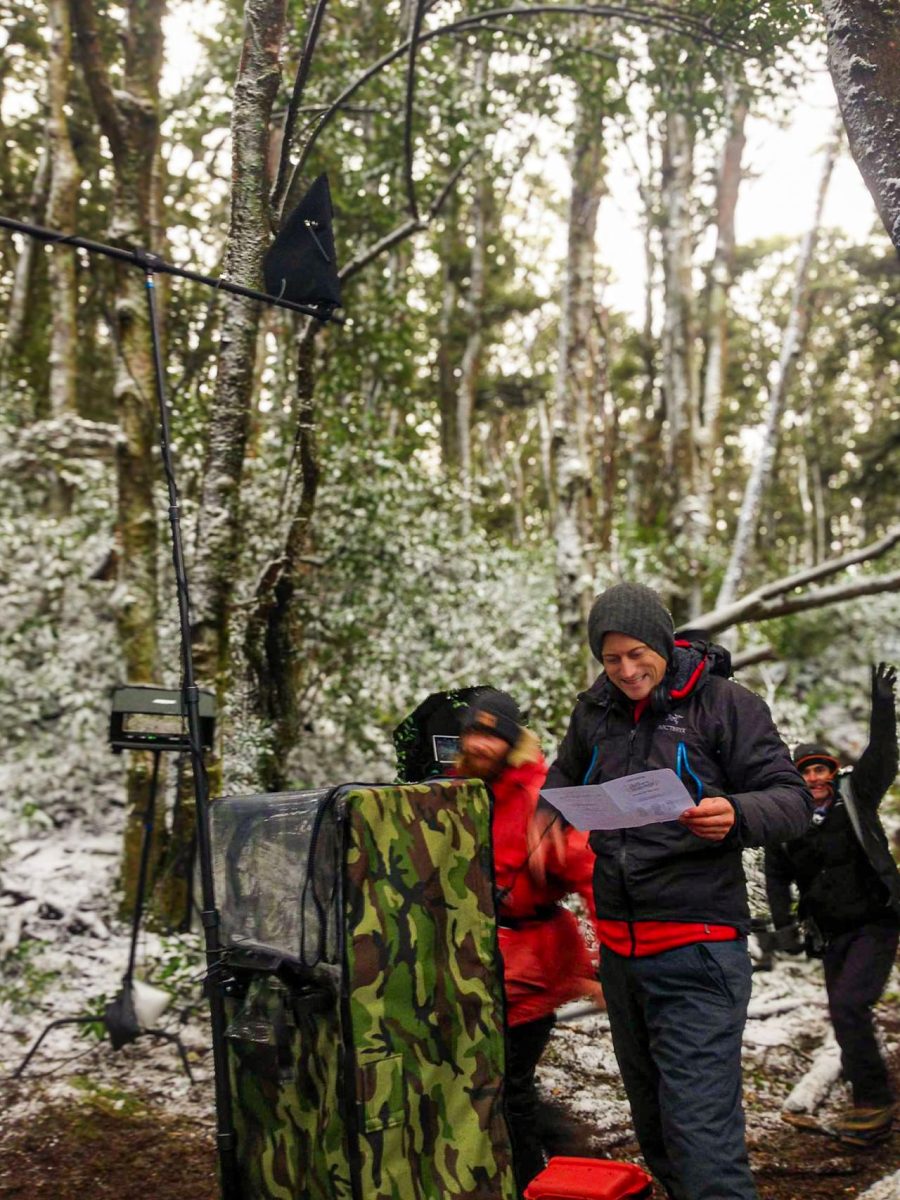
On Hunt for the Wilderpeople it was the New Zealand bush and the cold and wind of the Mount Ruapehu foothills, with Sam Neill and Julian Dennison on the move through rough country.
On Lord of the Flies the waterfall was up a mountain. We carried three sizes of waterproof bag, one big enough to climb inside, all with straps so they could be hoisted up. The job is to arrive with the gear dry and the team in good spirits.
Driving and chases
The chase sequences on Hunt for the Wilderpeople taught me to hold the point of focus while everything around it moves. The fight choreography on Monkey Man, shot on a gimbal through 360 degrees, taught me to trust my radio mics.
A Wisycom MTP61 transmitter into a Betso Sharkie antenna on my bag rig lets me stand well back, or ride in the follow vehicle, and still hear every word. The transmitter records on board as well, so a line is never lost if the radio drops out.
For riders the microphone goes inside the helmet, out of the wind. Engines and passes are recorded on their own, so the edit can balance the dialogue against the machine.
Crew from the region
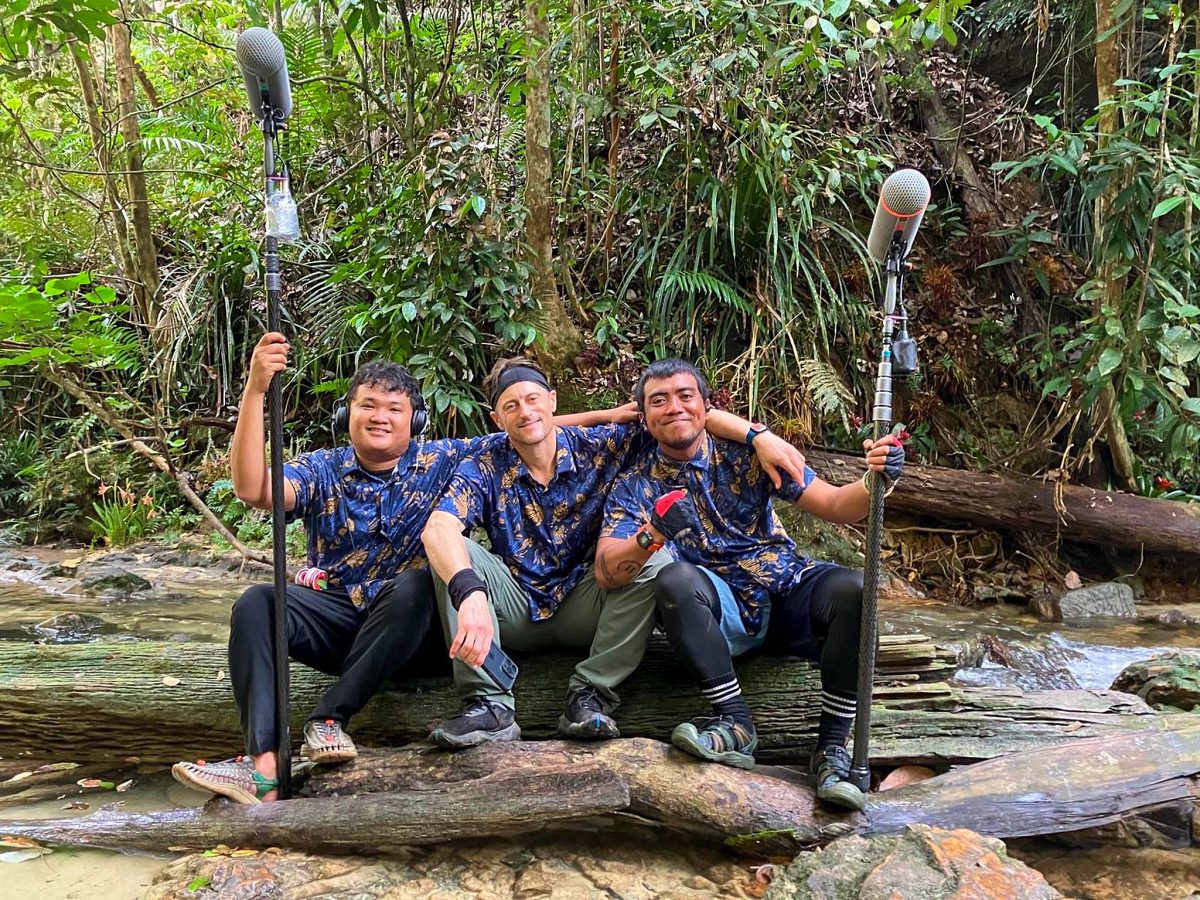
My team is from Southeast Asia. Boom operator Adyt Santoso and sound assistant Reza Feryanto are both Indonesian, and in Malaysia I crew locally. On Lord of the Flies we planned boat trips and set builds with production weeks ahead, so microphones were in place before the sets were finished.
On an island for Beta Squad
7.3 million viewsLast to Leave the Island on the Beta Squad channel. The whole shoot, cut to 67 minutes.
I recorded all the location audio, on a remote island in Indonesia, with my audio assistant Reza Feryanto.
Had the chance to work with Ande on a recent remote island shoot in Indonesia, and honestly he was an absolute weapon when it came to solving problems under pressure.
Josh Patil, Managing Partner of Baliprod Films and line producer of the shoot.